
Injection Mould Manufacturers in Pune | Shinho Precision Pune Pvt Ltd
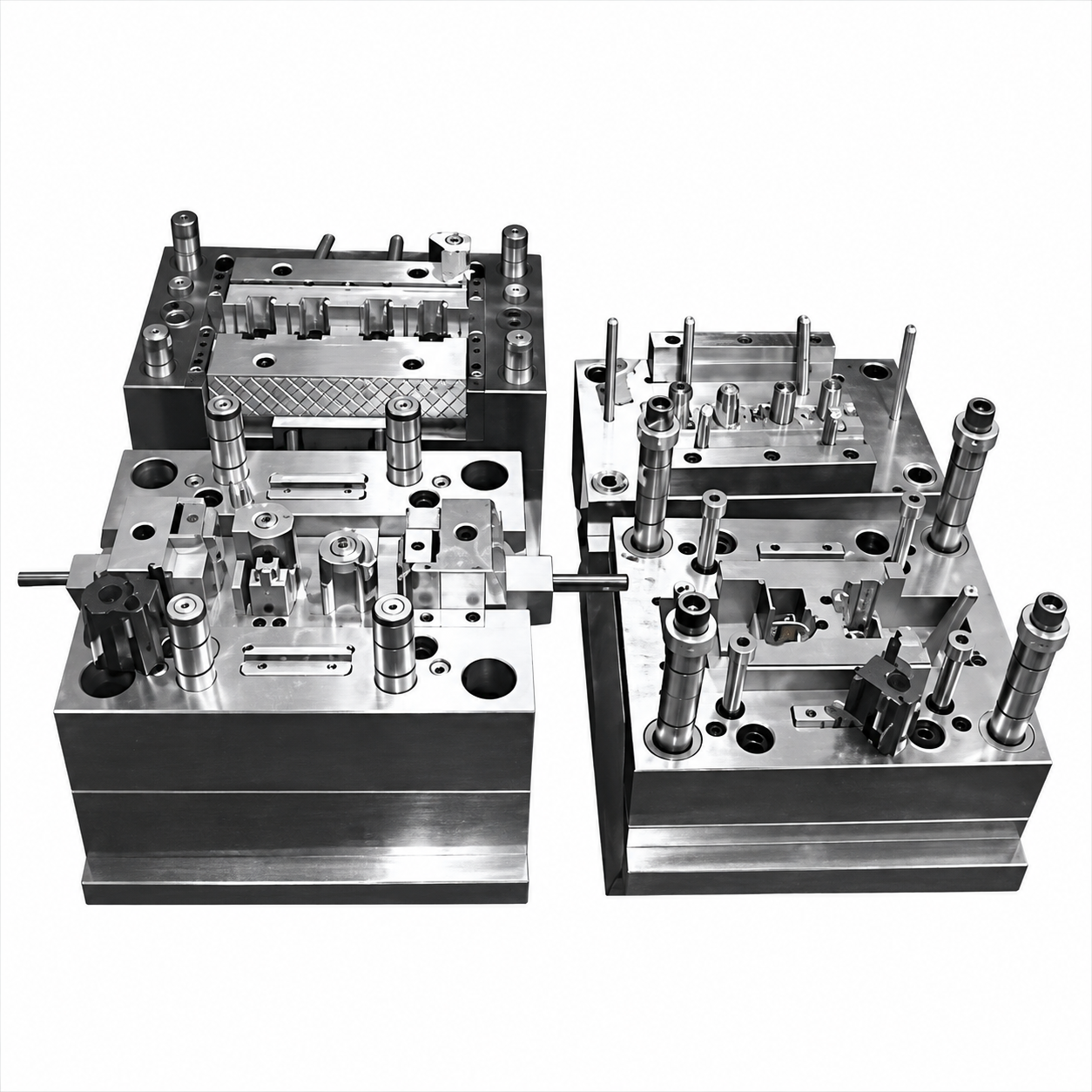


Shinho Precision Pune Pvt Ltd is leading Injection Mould Manufacturers, Suppliers, Exporters and Service Providers in Pune. An Injection Mould Manufacturer plays an important role in the production of accurate, durable, and high-quality moulds for plastic component manufacturing. These moulds are designed according to product dimensions, material requirements, production volume, and application needs.
Modern mould manufacturing combines precision machining, advanced design software, quality inspection, and suitable tooling materials. These technologies help manufacturers produce moulds capable of maintaining consistent dimensions throughout repeated production cycles.
From automotive and electrical products to medical devices and industrial components, professionally designed moulds support efficient mass production. Selecting an experienced manufacturer can help businesses achieve reliable tooling performance, reduced defects, and consistent product quality.
What is an Injection Mould ?
An injection mould manufacturer designs, develops, machines, assembles, and tests moulds used for producing plastic components. The manufacturing process generally begins with product analysis and mould design before moving to material selection, machining, finishing, assembly, and trial production. Manufacturers consider factors such as cavity configuration, cooling, runner systems, ejection, and component geometry. Proper mould engineering helps improve dimensional accuracy, production efficiency, surface quality, and tooling life.
Types of Injection Moulds
As we are leading Injection Mould Manufacturers in Pune, our Types are designed to meet different application requirements and industry standards, including the following types:
- 1. Precision Injection Molding: Precision Injection Molding is suitable for components that require tight dimensional control and consistent repeatability. It is commonly used for technical parts where accuracy and product consistency are important.
- 2. Stainless Steel Hot Runner Plastic Mould: A Stainless Steel Hot Runner Plastic Mould incorporates a heated runner system to deliver molten material efficiently into the mould cavities. It can help reduce material waste and support faster production cycles.
- 3. Grey Gas Assisted Injection Moulds: Grey Gas Assisted Injection Moulds use gas-assisted technology to help form components with specific internal structures and reduced material requirements. This approach can be useful for selected complex or lightweight applications.
- 4. Mild Steel Plastic Injection Mold: A Mild Steel Plastic Injection Mold uses mild steel as the primary tooling material for applications where suitable strength and cost considerations are required. It can be developed for specific production requirements and component designs.
- 5. Small Precision Moulds: Small precision moulds are designed for compact components that require accurate dimensions and detailed features. They are commonly used for miniature technical, electrical, medical, and industrial parts.
Working Principle of Injection Moulding
- Step 1: Product and Mould Design: The component design is evaluated to determine cavity layout, parting line, cooling arrangement, runner system, and ejection requirements.
- Step 2: Material Selection: Suitable tooling material is selected according to production volume, component material, operating conditions, expected tooling life, and surface requirements.
- Step 3: Machining: Individual mould plates, inserts, cavities, cores, and other components are manufactured using precision machining equipment.
- Step 4: Mould Assembly: The machined components are assembled with the required runner, cooling, guiding, and ejection systems to create the complete mould.
- Step 5: Trial Production: The completed mould is installed in an injection moulding machine and tested to identify dimensional, filling, cooling, or ejection issues.
- Step 6: Inspection and Adjustment: Trial components are inspected against the required specifications. Necessary modifications are made to improve mould performance and component quality.
- Step 7: Final Production: After successful testing and approval, the mould is ready for regular production and repeated manufacturing cycles.
Features and Benefits of Injection Mould
As Injection Mould Suppliers in Pune, our products provide several Features and Benefits including consistent quality, smooth finish, and long service life.
| Features | Benefits |
|---|---|
| Precision machining | Supports accurate cavity and component dimensions. |
| Customized mould design | Allows tooling to match specific product requirements. |
| Advanced cooling systems | Helps improve cycle efficiency and component consistency. |
| Multiple cavity options | Supports higher production volumes when required. |
| Durable tooling materials | Can provide reliable performance over repeated production cycles. |
| Automated ejection | Helps simplify component removal and improve production efficiency. |
| Quality inspection | Helps identify dimensional and manufacturing issues before production. |
| Advanced CAD/CAM technology | Improves mould design accuracy and supports efficient manufacturing planning. |
| High dimensional accuracy | Helps produce components with consistent tolerances and reliable fitting. |
| Complex geometry capability | Allows detailed shapes, fine features, and intricate component designs. |
| Efficient material flow | Helps achieve proper cavity filling and reduce potential moulding defects. |
| Optimized runner system | Supports efficient material distribution and can reduce material wastage. |
| Faster production cycles | Efficient mould design can help increase output and improve overall productivity. |
| Prototype compatibility | Supports testing and validation before moving to large-scale production. |
| Long tooling life | Proper material selection and maintenance can extend mould usability over repeated cycles. |
Applications of Injection Mould
As Injection Mould Exporters in Pune, our all types are used in various types of industrial sectors such as:
- 1. Automotive Components: Moulds are used to manufacture automotive housings, brackets, trims, covers, interior components, and technical plastic parts. Accurate tooling helps maintain consistency across large production volumes.
- 2. Electrical Products: Electrical manufacturers require moulds for switches, connectors, housings, plugs, protective covers, and enclosures. Proper tooling helps achieve accurate component dimensions and reliable assembly.
- 3. Medical Components: Medical and healthcare industries use precision tooling for laboratory products, medical devices, disposable components, and specialized plastic parts. Consistent manufacturing is important for maintaining product specifications.
- 4. Consumer Products: Household products, appliance components, containers, handles, caps, and other consumer goods can be produced using injection moulding. Customized tooling supports different shapes, designs, and production requirements.
- 5. Industrial Equipment: Industrial manufacturers use moulded plastic parts for machine covers, protective housings, brackets, connectors, and technical components. Suitable tooling helps deliver repeatable results during continuous production.
- 6. Packaging Products: Packaging manufacturers use moulds for caps, closures, containers, and other plastic packaging components. High-production tooling can support efficient manufacturing while maintaining consistent dimensions.
- 7. Electronic Components: Electronic devices require compact and accurately shaped plastic housings, covers, connectors, and protective components. Precision tooling helps manufacture detailed parts suitable for electronic assemblies.
Why Choose Us?
As Providers of Injection Mould Services in Pune, we deliver premium-quality Services designed to meet diverse industrial requirements. Here's why we stand out:
- Experienced Tooling Expertise: Our team understands mould design, machining, assembly, cooling, runner systems, and ejection requirements. This allows us to develop practical tooling solutions for different applications.
- Customized Engineering: Every component has different requirements. We develop mould designs according to product geometry, material selection, production quantity, dimensional tolerances, and application conditions.
- Precision Manufacturing: We focus on accurate machining and careful assembly to support reliable mould performance. Quality inspection helps maintain consistency throughout the manufacturing process.
- Application-Based Solutions: From complex industrial components to compact technical products, our moulding solutions can be developed according to specific production requirements and component designs.
- Technical Support: We provide support during design evaluation, mould development, trial production, inspection, and final implementation. This helps customers address tooling requirements efficiently.
Choose Shinho Precision Pune Pvt Ltd is leading Injection Mould Manufacturers, Suppliers, Exporters and Service Providers in Pune. Professional mould manufacturing is essential for producing consistent and high-quality plastic components. Well-engineered tooling can improve dimensional accuracy, production efficiency, repeatability, and overall manufacturing performance. The right mould configuration depends on component design, material, production volume, tooling life, and application requirements. Advanced machining and inspection technologies further improve mould development and quality control. Choosing a technically capable manufacturing partner can help businesses achieve reliable tooling for both standard and specialized plastic production.
FAQ's
Precision injection molding is a manufacturing method used to produce plastic components with tight dimensional tolerances and consistent repeatability. It is particularly suitable for technical components requiring high accuracy.
The process involves melting plastic material and injecting it into a mould cavity under controlled pressure. After the material cools and solidifies, the mould opens and the finished component is ejected.
Injection Mold Tooling is designed by analyzing component geometry, material properties, production volume, cooling requirements, runner configuration, parting lines, and ejection requirements.
Tooling life depends on mould material, component material, production volume, operating conditions, maintenance, cooling efficiency, and machining quality. Regular inspection and maintenance can help preserve performance.
Consider the manufacturer's design expertise, machining capabilities, tooling materials, quality-control practices, trial-production facilities, technical support, and experience with similar components.