
Industrial Mould Manufacturing Services in India
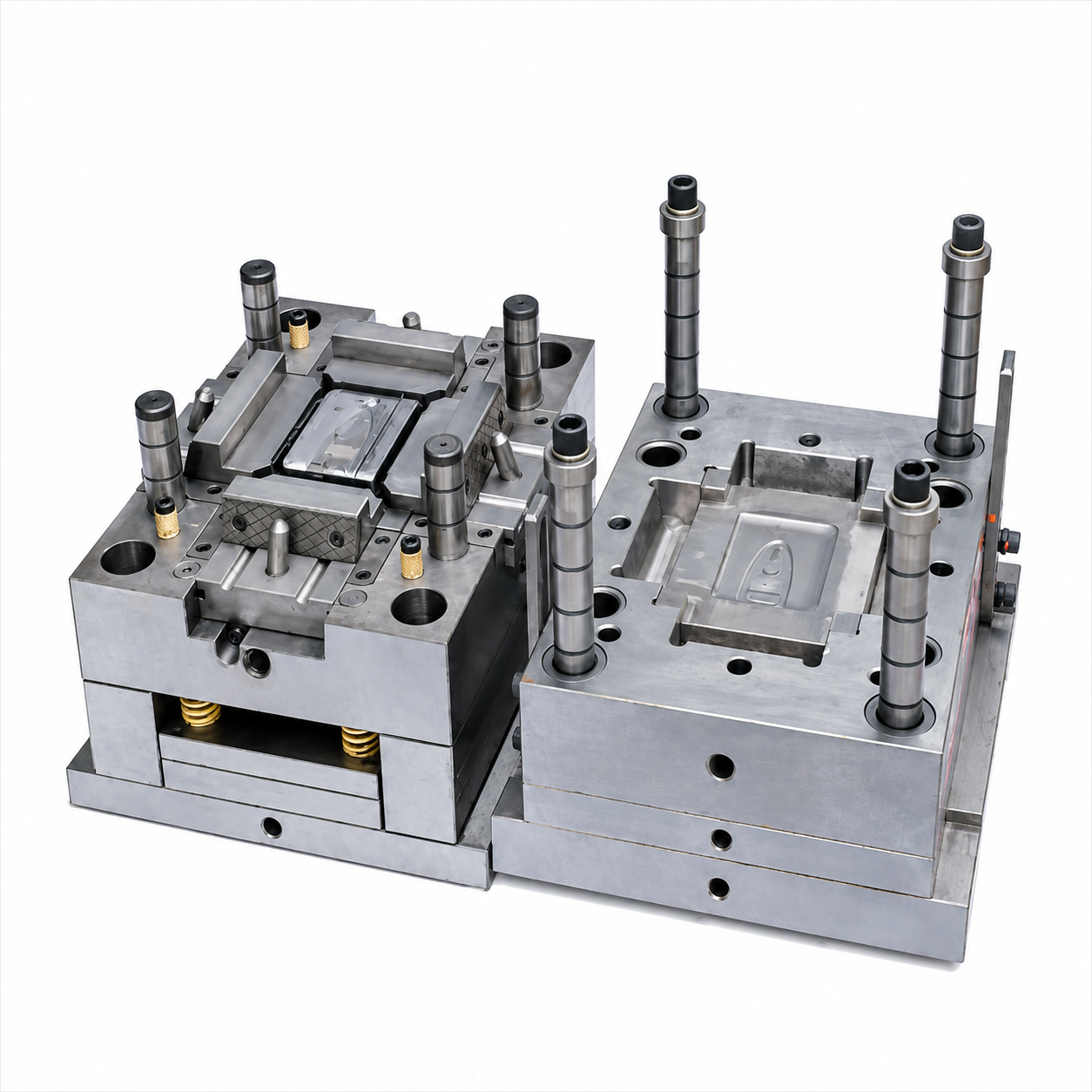


Shinho Precision Pune Pvt Ltd is leading Industrial Mould Manufacturing Services in India. Industrial mould manufacturing services provide specialized tooling solutions for producing accurate, durable, and consistent components for different manufacturing industries. These services cover mould design, engineering, machining, assembly, testing, and maintenance.
Modern industries require reliable tooling to manufacture components with consistent dimensions, complex geometries, and high-quality surface finishes. Advanced machining technologies and proper mould engineering help improve production efficiency and repeatability.
From automotive and electrical products to packaging, consumer goods, and industrial equipment, professionally manufactured moulds support a wide range of production requirements. Choosing the right tooling solution can help reduce manufacturing variations and improve long-term production performance.
What is an Industrial Mould?
An industrial mould is a specially engineered tool used to shape raw materials into specific components during a manufacturing process. It can include cavities, cores, runners, cooling channels, inserts, guide systems, and ejection mechanisms. The mould is designed according to product geometry, material properties, production volume, and dimensional requirements. Proper tooling helps manufacturers achieve consistent components while supporting efficient and repeatable production cycles.
Types of Industrial Moulds
As we are leading Industrial Mould Manufacturers in India, our Types are designed to meet different application requirements and industry standards, including the following types:
- 1. Plastic Injection Mould: A plastic injection mould is used to manufacture plastic components by injecting molten material into a precision-engineered cavity. It is suitable for producing both simple and complex products at different production volumes.
- 2. Custom Injection Mould for Plastic Parts: A custom injection mould for plastic parts is designed according to the specific geometry, dimensions, material, and performance requirements of a product. It is suitable for specialized components that require customized tooling.
- 3. Multi-Cavity Injection Mould: A multi-cavity injection mould contains multiple cavities that allow several components to be produced during a single production cycle. This configuration is useful for high-volume manufacturing and can improve production efficiency.
- 4. Single Cavity Injection Mould: A single cavity injection mould produces one component per production cycle. It is often suitable for prototypes, low-volume production, larger components, or applications where tooling simplicity is preferred.
- 5. Hot Runner Injection Mould: A hot runner injection mould uses a heated runner system to transfer molten plastic to the cavities. It can reduce runner material waste and support efficient production cycles for suitable applications.
Working Principle of Industrial Mould Manufacturing
- Step 1: Product Analysis: The product design is reviewed to understand its geometry, dimensions, wall thickness, tolerances, material, and production requirements.
- Step 2: Mould Design: Engineers develop the tooling design using CAD software. Cavity configuration, parting lines, runners, cooling channels, inserts, and ejection systems are considered.
- Step 3: Material Selection: Suitable tooling materials are selected according to production volume, expected tool life, component material, wear requirements, and operating conditions.
- Step 4: Precision Machining: Mould plates, cavities, cores, inserts, and other components are manufactured using CNC machining, EDM, grinding, drilling, and other suitable technologies.
- Step 5: Assembly: The machined components are assembled and accurately aligned. Runner, cooling, guide, and ejection systems are installed according to the tooling design.
- Step 6: Trial Production: The completed mould is tested using the required material and production parameters. Trial parts are inspected to identify filling, dimensional, cooling, or ejection issues.
- Step 7: Final Inspection: Necessary corrections are completed before final approval. The finished mould is then prepared for regular production.
Features and Benefits of Industrial Mould
As Industrial Mould Suppliers in India, our products provide several benefits including consistent quality, smooth finish, and long service life.
| Features | Benefits |
|---|---|
| Precision engineering | Helps achieve accurate and consistent components with reliable dimensional control. |
| Customized tooling | Supports specific product and production requirements for different applications. |
| Multiple cavity configurations | Provides flexibility for different production volumes and output requirements. |
| Advanced cooling systems | Helps improve cycle consistency, dimensional stability, and component quality. |
| Durable construction | Supports repeated production cycles and longer tooling life. |
| Automated ejection | Helps simplify component removal and improve overall production efficiency. |
| Quality inspection | Helps identify tooling and dimensional issues before regular production begins. |
| Advanced CAD/CAM design | Improves tooling design accuracy and supports efficient manufacturing planning. |
| Optimized runner system | Promotes efficient material flow and can help reduce material wastage. |
| High dimensional accuracy | Helps maintain consistent component sizes and reliable product assembly. |
| Complex geometry capability | Allows detailed and intricate components to be manufactured according to design specifications. |
| Efficient material flow | Helps achieve uniform cavity filling and can minimize common moulding defects. |
| Flexible production capacity | Allows tooling configurations to be selected according to low-, medium-, or high-volume requirements. |
| High production efficiency | Helps optimize cycle performance and increase overall manufacturing productivity. |
| Extended tooling reliability | Suitable materials, proper maintenance, and accurate manufacturing can support long-term tooling performance. |
Applications of Industrial Mould
As Industrial Mould Exporters in India, our all types are used in various types of industrial sectors such as:
- 1. Automotive Industry: Industrial tooling is used for manufacturing automotive housings, brackets, covers, trims, interior parts, and technical components. Accurate moulds help maintain consistency during high-volume production.
- 2. Electrical Products: Moulds are used to manufacture switches, connectors, sockets, junction boxes, housings, and protective electrical components. Proper tooling supports accurate dimensions and reliable assembly.
- 3. Consumer Products: Household items, appliance components, handles, containers, caps, and other consumer products can be manufactured using customized tooling. Different shapes and surface finishes can be incorporated into mould designs.
- 4. Packaging Industry: Packaging manufacturers use moulds for containers, closures, caps, and other plastic packaging products. High-production tooling can support efficient manufacturing with repeatable dimensions.
- 5. Medical Products: Medical and healthcare manufacturers use specialized tooling for devices, laboratory products, disposable components, and other technical plastic parts. Precision and consistency are important for these applications.
- 6. Industrial Equipment: Moulded components are used for machine housings, covers, brackets, connectors, and protective parts. Customized tooling can help manufacturers produce components according to specific equipment requirements.
- 7. Electronics Industry: Electronic devices require accurately manufactured housings, connectors, covers, and small technical components. Precision tooling supports detailed product designs and consistent assembly.
Why Choose Us?
As Providers of Industrial Mould Services in India, we deliver premium-quality Services designed to meet diverse industrial requirements. Here's why we stand out:
- 1. Experienced Tooling Team: Our team has expertise in mould design, engineering, machining, assembly, testing, and production requirements. This allows us to develop suitable tooling solutions for different industries.
- 2. Customized Engineering: We develop moulds according to product drawings, dimensions, material requirements, production volume, and application conditions. Each tooling project is evaluated individually.
- 3. Precision Manufacturing: Advanced machining and inspection methods help us achieve accurate mould dimensions and reliable component production. Quality control is considered throughout the manufacturing process.
- 4. Flexible Mould Configurations: We can develop suitable cavity arrangements and runner systems according to production requirements. This provides flexibility for low-volume, medium-volume, and high-volume manufacturing.
- 5. Technical Support: Our team provides assistance from initial design evaluation through mould development, trial production, inspection, and final implementation. This helps customers manage tooling projects efficiently.
Choose Shinho Precision Pune Pvt Ltd is leading Industrial Mould Manufacturing Services in India. Industrial mould manufacturing is an important part of modern component production across automotive, electrical, medical, packaging, electronics, consumer, and industrial sectors. Proper mould design and precision manufacturing help improve dimensional accuracy, production consistency, cycle efficiency, and product quality. The ideal tooling configuration depends on component design, material, production quantity, and required tooling life. Customized engineering allows manufacturers to address specialized production requirements while maintaining repeatability. Selecting an experienced tooling partner can support reliable production and long-term manufacturing efficiency.
FAQ's
Important factors include component design, material type, production volume, cavity configuration, tooling material, cooling requirements, ejection system, and expected mould life. These factors determine the most suitable tooling configuration.
A single-cavity tool produces one component per cycle, while a multi-cavity tool produces multiple identical components in one cycle. The choice depends mainly on production volume, component size, and tooling investment.
A hot runner system can be beneficial for suitable high-volume applications where reducing runner waste and improving cycle efficiency are important. Its suitability depends on the material and component design.
Yes, moulds can be customized according to product geometry, dimensions, material, surface finish, production volume, and machine requirements. Custom tooling is useful for specialized or application-specific components.
Good mould design supports balanced material flow, efficient cooling, reliable ejection, dimensional consistency, and reduced production defects. It can also contribute to improved cycle times and tooling performance.